суббота, 2 января 2021 г.

Scythia - the revolving door into Europe

Before the days of planes and political asylum, the most common way into Europe was via an area known historically as Scythia - the Danube Basin (Scythia Minor) and the Pontic-Caspian steppe (Scythia Major).  

As I have been writing up a masters thesis on the missionary work from Constantinople, again and again this area and this phenomenon has been relevant. I have identified several phases of the occupation/settlement of these areas. As I am able to access more data and scholarship, I hope to expand the information below with authoritative maps. 

1. Goths and Huns (from 376) 

2. Gepids and Cutrigurs, Utrigurs and Bulgars (from 453) 

3. Slavs and Avars (from 557) 

4. Bulgars/Bulgarians and Khazars; the so-called Pax Chazarica (from 630) 

5. Pechenegs and Cumans (from 10th century) 

There were earlier and later phases of this phenomenon (i.e. pre-IV century and post-XI century). 

In many cases the peoples dominant in this area either went on to migrate into Europe, or lost their ethnic identity vis-a-vis newly dominant peoples. A primary example of the latter would be the Avars who, following their unsuccessful siege of Constantinople, were absorbed by their Slavic neighbours and in the 'reconquest' of the Balkans by Constantinople.   


вторник, 29 декабря 2020 г.

Не принуждать, а убеждать (Афанасий Александрийский, IV век)

"The truth is not preached with swords or with darts nor by means of soldiers, but by persuasion and counsel... it is the part of true godliness not to compel, but to persuade."

(Athanasius of Alexandria, Against the Arians, 4th century)

"Не мечем и стрелами, не с помощью воинов возвещается истина, но убеждением и советом... Ибо богочестию свойственно, как говорили мы, не принуждать, а убеждать".

(Афанасий Александрийский, Против Ариан, IV век, http://www.golden-ship.ru/knigi/9/afanasij_vel_tvorenija_2.htm)

четверг, 19 ноября 2020 г.

What if they don't speak English?

You are a minister, or an active member of a Christian church, and there are people in your church who don't speak much English. Or there are people in the wider community whom you would like to reach out to - and they don't have much English.

What do you do? 

Here are some general pointers which hopefully you will find helpful. 

  1. Love them - not in a patronising, feel-sorry-for-you kind of way, but in a Christian, sharing-fellowship, I-enjoy-spending-time-with-you kind of way.  
  2. Be genuinely interested in them, learning to ask sympathetic questions they will find it easy to answer.
  3. Have your eyes open all the time that some things might be strange or even unacceptable. Don't assume that people agreeing to things or smiling means that they are comfortable. 
  4. When they want to tell you something, listen. Be patient, try all sorts of ways to help them get across what they want to say. 
  5. Learn to speak English in a way which is easy for non-native speakers to follow. Speak a bit slower and pronounce words clearly. Use words they know and avoid phraseology which might be confusing. 
  6. See if there are ways you can proactively find out about their language and culture. 
  7. Make sure they have a Bible and other Christian literature in their own language. 
  8. Make sure they have the option of being in touch with other believers who share their native language. 
  9. Give them opportunities to express their faith in their heart language. It might be reading a passage or praying out loud in their language, sharing a song or expressing their faith in some artistic way. 
  10. Learn some words in their language - or try to take it up as a foreign language. 
  11. When you teach the Bible (eg sermon, small group meeting), find out what it says in their translation - and how that might help you communicate with them. 
  12. Draw on links with churches and ministers in their home country who could advise you or offer other help. 
  13. Consider setting up an affinity group at your church, where foreign-language speakers can interact in their own language, whilst making sure they maintain a strong link with the majority English-medium church. 
  14. Create opportunities for them to share their cuisine - with you and others at the church. (This is my personal favourite tip!) 
  15. Work harder than usual to help them integrate with others in the church, rather than becoming isolated individuals or an inward-looking clique. 
  16. Always be prepared for them returning to their country of origin and being able to engage with the church there, not becoming 'foreigners in their own country'. 
  17. Have the self-awareness that a lot of what we do is culturally conditioned - legitimate and helpful in our cultural setting, but not universal across cultures. 
  18. Don't apologise for using English, or for your English-speaking culture; unity is a two-way street.  
Russell Phillips (Acts 2:11 Edinburgh) 

суббота, 22 августа 2020 г.

La naissance du français (Le troisième concile de Tours)

Ça fait presque 25 ans que je m'intéresse à l'histoire de l'Église. Pour beaucoup de gens, l'histoire de l'église n'est pas quelque chose d'intéressant, même s' ils s'intéressent à l'histoire en générale. Pour moi cette histoire est intéressante pour au moins deux raisons: en premier lieu parce que je suis croyant et c'est l'histoire de la pratique de la foi chrétienne, et, deuxièmement, sans l'histoire de l'Église on peut point comprendre l'histoire et la patrimoine de notre civilisation européenne.

En 813 a lieu le troisième concile de Tours. Ce conseil ecclésiastique a pris une décision à l'énorme importance pour l'histoire de l'Europe. Désormais les prédications dans les églises ne devront plus être en Latin, mais "en rusticam Romanam linguam aut Theodiscam, quo facilius cuncti possint intellegere quae dicuntur" ("en langue romane ou germanique, ce qui permettra à tous de pouvoir comprendre ce qui est dit"). Cette décision conciliaire reconnaît le fait qu' en 813 le Latin n'est pas la langue du peuple: dans le royaume des Francs on parle le roman et le francique (une langue germanique) et de nombreuses autres langues. C'est la première fois que cette langue, qui ensuite évoluera vers la langue française, est reconnue comme une langue distincte du Latin.

Cet événement démontre aussi que déjà au IXe siècle il y avait une prédication pour le peuple dans leur propre langue et donc une traduction, au moins orale, des Saintes Ecritures dans la langue vernaculaire au sein de l'Église chrétienne occidentale.

воскресенье, 19 июля 2020 г.

Feasibility in moral theology

I am writing in response to an article by Rick Aaron, who argues that singleness, is "not practically feasible" and therefore "not morally obligatory", or, to paraphrase, "I can't do it, so I don't have to."


Let me begin by addressing the issue theologically. I do so, since the author expressly sets out to critique the “conservative Christian” stance. He argues that, since singleness, as an alternative to opposite-sex marriage, requires "supernatural help", it cannot be morally binding. Theologically, this is the Pelagian heresy, namely the notion that people are naturally able to fulfil the moral law without recourse to divine aid. Christianity teaches that all moral obligations require divine aid to be fulfilled. Granted, "supernatural help" can only be voluntarily embraced. However, for many I know voluntary singleness belongs in the same category as sacrificial love, patience, fidelity in relationships, truth-telling – i.e. something practised as they walk the narrow path of reliance upon divine grace.


Now, let me also address the argument from a moral philosophy point of view.


Firstly, the argument that singleness is not morally obligatory because it is “not practically feasible”, evidently opens itself to refutation, depending on the definition of “feasibility”. By implication, if singleness can be shown to be feasible, it follows that it could be a moral obligation. Singleness is certainly statistically feasible; in many modern societies over 50% of households are single-person households, not to mention single-parent families. It is unhelpful to suggest all these people are living “loveless” lives, for which a romantic relationship would be a panacea, and to dismiss other forms of relational engagement.


Secondly, “feasibility”, by any definition, is a flawed criterion for identifying right and wrong. We would not apply it in other cases. Someone might find social distancing unbearable or their own inner racist sentiments insuperable. Another person might feel drawn into inappropriate and damaging relationships or compelled to succumb to addictive behaviour. It might be argued that the good is not “feasible” in these cases. But it is not a requirement for the good to be "easy to do" or that "most people can do it". We only ever fulfil our moral responsibility partially and imperfectly; that does not change what is right or wrong.


I want to express my support for those of all circumstances and sexual orientations practising singleness as an alternative to opposite-sex marriage.

среда, 8 июля 2020 г.

VII. Монте Кассино (глава VII из книги "20 этапов от Эфеса до края земли")

В V веке сверхдержава, исповедующая христианскую веру в качестве официальной религии, западно-римская империя, подвергалась нападениям от народов-варваров. Осмысливая эти обстоятельства в труде «О граде Божьем», отец западно-христианского богословия, Августин, писал о том, что существуют два разных «града». Есть временная человеческая цивилизация (град человеческий, например, Рим) и есть вечное царство Божье (Град Божий). Как проявление «града человеческого» западно-римская империя может сойти на нет, а царство Божье пребудет во век. (О восточно-римской империи со столицей в Константинполе – в следующей главе.)

Свято место пусто не бывает

Варвары многократно вторгались в Рим, и в итоге в 476 правитель-варвар Одоакр низложил последнего римского императора. Теперь Европой правят разные государства народов-«варваров», такие как остготы, визиготы, бургунды, лангобарды, исповедующие христианство в искаженном виде арианства (см. гл. V). А вся римская цивилизация рухнула, оставляя за собой «пустое место». «Пустое место» заполнила церковь. Отличительная черта средневековья в том, что общество находилось под монополией единой церкви («христианский мир»). Начиная с младенческого крещения, вся жизнь человека проходила в сопровождении церкви через семь таинств («обряды перехода») и человек воспринимал свой жизненный путь и место в обществе в рамках христианского мировоззрения.
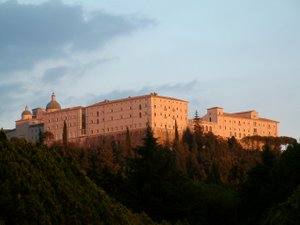
Стержень церкви – монашеское движение, так называемая «церковь, живущая по уставу» (в  отличие от общей, «мирской» церкви). Перейдя с востока в IV веке, ранними представителями западного монашества Мартин Турский, Иоанн Кассиан, Иероним, Августин. Монашество на западе процветало в сегодняшней Франции, а также в Ирландии и в Уэльсе («кельтское христианство»). VI век даже называют «веком святых», когда, например при Ильтуде была основана школа-семинария в Уэльсе, которая «выпускала» множество великих служителей. А в 529 Бенедикт Нурсийский основал монастырь в Монте Кассино (Италия). Это начало Бенедиктинского монашеского ордена. Строя на основании восточного монашества, устав Бенедикта предписывает общинную жизни молитвы и труда умеренной строгости. Монахи дают троякий обет: постоянство (остаться в одном монастыре), послушание (настоятелю и уставу) и исправление нравов (безбрачие и отказ от имущества). Монашеское движение представляет собой некие «духовные военные силы» церкви. Кто-то называет время с VI по X вв. «бенедиктинскими столетиями».

Одна из функций монастырей – хранить и передать знания. Такие ключевые фигуры как Боэций (ум. 525) и Кассиодор (ум. 580), т.н. «латинские передатчики», сохранили древние знания и установили систему христианского образования. Прежние римские учебные заведения сошли на нет и были заменены «школами» при монастырях и соборах, где с юного возраста обучались будущие монахи и священники (а попозже и светские правители).

Папа римский

Во главе западной церкви стоял епископ города Рим: папа Римский. «Папа» означает «патриарх», которых было пять: Рим, Константиполь, Антиохия. Александрия, Иерусалим. Будучи епископом столичного города, папа был патриархом всего запада: ему подчинялись все епископы и вся западная церковь. Более того, папа считал себя «первым» среди патриархов христианской церкви и все больше претендовал на власть над всей церковью.

В условиях политическго вакуума, церковь, в лице духовенства, во главе с папой, взяла на себя некоторые политические функции. Уже в V веке папа Лев Великий отговорил Аттилу разгромить Рим. А на рубеже VI и VII веков папа Григорий Великий заключил мир с лангобардами и поддерживал отношения с франкским государством.

Тот же Григорий Великий (ум. 604) был одним из выдающихся пап. Он был из влиятельного римского рода, и послужил префектом Рима (на подобии мэра) в возрасте 30 лет. Григорий потом стал монахом и основывал монастыри. Будучи еще в сане дьякона, он был отправлен в Константинполь в качестве посла римского папы. Кстати, поскольку Император Константинполя считался царем всех христиан, вплоть до 754г он утверждал кандидатуру папы римского. Во время пребывания в Контстантинополя, Григорий устоял в споре с патриархом по вопросу о «ощущаемости» тела воскресшего Господа, что патриарх отвергал.

Вернувшись в Рим, Григорий принял сан священника и в итоге стал первым монахом-папой римским. Папство Григория Великого было очень плодотворным. Он упорядочил и развил единый чин мессы (литургии), центром которой была евхаристия, которая понималась как «бескровная жертва». Именно этот чин стал единым образцом для всего заподно-христианского мира. Григорий поэтому считался «отцом христианского богослужения». Скорее «григорианское пение» относится к IX веку но несет имя папы. Григорий Великий отправил миссию к англам и саксам-язычникам в Англию. Он же укрепил власть папы. На более позднем Уитбиском синоде (664) монахи-кельты приняли единый обряд Рима. Григорий внес существенный вклад в становление средневекового богословия, сочетая учение о благодати с учением о добрых делах: «избранные достигают [вечного царства] собственными усилиями». Добрые дела верующих рассматривались в плоскости «удовлетворения» (сатисфакции) требований Бога и церкви. Григорий также поощрял почитание святых, почитание образов, учение о чистилище. Он же написал ценный труд о душепопечительской работе священнослужителя: «О пастырской опеке». Григорий считается последним из «Отцов» западно-христианской церкви и первым из пап средневековья.

Обретения и потери

В VII и VIII веках христианство процветало в монастырях Ирландии и Нортумбрии (север Англии). Были важные монастыри в Арме, Бангоре, Ионе, Линдисфарне. известным ученым этого периода был Беда (+736).

Начиная с 563 монахи из Ирландии отправились на континент Европы: это явление называется «странствование ради Христа» (peregrinatio pro Christo): добровольная «ссылка» на половину как акт покаяния, на половину как служение Монахи-странники поехали к номинальным верующим христианской Европы. Ирландский монах, Колмубан (+615) странствовал по Европе, встречался с королями и епископами, организовал монастыри, такие как Люксёй, Корби, Боббио. Монашеский устав Колмубана был строгим: «главное в монашеском уставе – умерщвление плоти». В итоге более умеренный устав Бенедикта стал повсеместным стандартом.

Со второй половины VII века, начиная с 680, были подобные миссии из Англии неверующим к германским народам. В итоге, благодаря миссионерскому служению Бонифация, Виллиброрда и других, власть Рима и папы была все более централизована.

Другое место где процветало христианство – визиготская Испания. На третьем Толедском соборе 589г готы-ариане уеровали в божественности Сына и приняли никейскую веру. Визиготское государство отные исповедует никейское христианство. Исидор Севильский (+636) был здесь ведущим христианским ученым и деятелем, при котором в 633 г был заключен союз между церковью и визиготским государством.

В то же время с 622г появилась в мире новая религия: Ислам. Ислам завоевал прежние очаги западно-христианской церкви в северной Африке (698 г) и Испания (711 г). Церковь имеет некоторую, ограниченную свободу при Исламе, но находится в притесненном положении.

Благодать и филиокве

Важнейший вопрос в западном богословии – взаимоотношение между Божьей благодатью и свободной волей человека.

В начале V века Августин, опровергнул учение еретика Пелагия, по которому человек сам идет по пути спасения без помощи от Божьей благодати. В VI веке церковь на западе вернулась к этим вопросам. При Цезарии Арльском (ум. 542) церковь отвергла учение полупегианства, по которому человек нуждается в благодати Божьей для спасения, но снчала должен делать «первый шаг», взывая к Богу о помощи, а только после этого Бог дает благодать. На западе полупелегианство считается лжеучением, тогда когда восточно-христианская церковь учить «взаимодействию» (синергия). Как минимум запад и восток делают акцент по этому вопросу в разные направления. Во всяком случае в VI веке западная церковь утвердила позицию Цезария, по которому «Благодать Божья приходит к каждому, способствующая человеку выбирать и исполнять то, что необходимо для спасения». Это учение можно охарактеризовать как «полуавгустинианство».

Сам Августин (и такие более поздние мыслители, как Годескальк) верил, что Бог не только способствует избранным «выбирать и исполнять», как учил Цезарий Арльский, а представляет собой некую «непобедимую силу», которая влечет их к Богу и они остаются верными Ему до конца. За этим стоит учение о безусловном предопределении избранных к вечному спасению. Это стало поводом для богословских споров.

Главным яблоком раздора между западом и востоком стали разные концепции о Триедином Бога. По восточной концепции о Святой Троице во главе стоит Бог-Отец: Отец рождает Бога-Сына и от Отца исходит Бог Дух Святой. Отец есть «начало и источник Божества». В этой связи Ириней Лионский говорил о Сыне и о Духе как о «руках Бога». Со времен Августина была и другая концепция, которая рассуждает не от одного из божественных лиц (Отец), а от единой сущности всего Божества. В Божестве есть три лица (ипостаси), которые состоят в вечных отношениях друг с другом. В едином Божестве Отец любит Сына, Сын отвечает на любовь Отца и Дух Святой и есть та любовь, которая исходит от Отца к Сыну и от Сына к Отцу. Получается, по второй, западной концепции, Дух исходит не только от Отца, но и от Сына: Дух есть двухсторонняя «связь» между Отцом и Сыном. На Латыни это учение называется «филиокве» («и от Сына»). Разногласия по этому вопросу станут почвой для того, чтобы церковь запада и востока стали расходиться по разным путям.

Ксатати, западная концепция о Троице имела еще такое преимущество, что она помогла убедить готов-ариан в божественности Сына и принять никейскую веру. К VII веку народы исповедовавшие арианское христианство приняли никейскую веру и вошли в общую христианскую церковь.

Расселл Филлипс (2020)

пятница, 19 июня 2020 г.

Race

Let me preface this article by expressing my sorrow at the unjust death in custody of George Floyd and my solidarity with opposition to racism. Also, let me say that I realise my own need to read more about the history of phenomena such as the slave trade, racism and imperialism (which I am not equating).

Now, I want to share some thoughts on the issue of 'race'.

Firstly, when people pre-17th century spoke of race, they were not talking about skin colour. Race meant 'language and culture'. That is what was meant in Roman times and what Winston Churchill meant when he entitled his history of the British Isles, 'Island Race'. We need to recognise that the diversity of humanity is not only, or even primarily, biological. Differences in language and culture may be far more significant.

Secondly, it is popular today to say, "There is only one race: the human race." That makes a lot of sense to me. Interestingly for me as a Christian, the very basis for this assertion, namely the monogenesis of the human race from a single couple, i.e. Eve and her husband, Adam (see Acts 17:26), long maligned and ridiculed, is being taken for granted in public discourse. Historically, it was, among other things, the multi-genesis theories of human origins which facilitated racial discrimination.

So what is a good way to describe the obvious differences between groups of humans

At this point maybe you are thinking, "Why bother?" Why not, indeed, ignore these differences, finding reasons to question them altogether? To me this seems crazy, a total over-reaction to racism. The richness and diversity of the human race should be acknowledged and celebrated, not shamefully ignored. And there are all sorts of situations where recognising such difference can be helpful, not least in respect to outcomes in the recent Covid-19 epidemic.

Here are some ways we could talk about 'races':

Phenotypes. Basically this boils down to shared biological characteristics. I remember when my Chinese friend, who used the name Anatoly in Russia, pointed out to me that my eyes were set back in deep eye sockets, unlike his which were on the surface of his face. It's obvious when you think about it. Again, interestingly for evolutionary theory, in many cases biological similarities cannot be attributed to shared ancestry.

Clades. Another term for this would be "ancestrally differentiated populations"; a clade is the set of all those people descended from a common ancestor. Templeton (1998) gives the following, interesting qualification, "Human population groups are not monophyletic, as there appears to always have been considerable gene flow between human populations." Interestingly, Walsh and Yun observe, "Genetic studies using very few chromosomal loci find that genetic polymorphisms divide human populations into clusters with almost 100 percent accuracy and that they correspond to the traditional anthropological categories." Those categories would be the 3-5 traditional 'races': Negroid (Black) race.and Capoid (Bushmen/Hottentots) races; Mongoloid (Oriental/Amerindian) and Australoid (Australian Aborigine and Papuan) races; and the Caucasoid (White) race. In traditional Christian thought, these were associated with the three sons of Noah: Ham, Shem and Japheth.   

Geography/proximity, i.e. "a group of organisms of the same species occupying a particular space at a particular time". This is really fascinating. Basically, this recognises that organisms (in our case humans) who share the same environment at a particular time are more likely to be similar to one another, even if they have divergent genetic origins. Ossorio and Duster (2005): "Anthropologists long ago discovered that humans' physical traits vary gradually, with groups that are close geographic neighbors being more similar than groups that are geographically separated."

Let me finish by reiterating that this is not 'racism by the backdoor'. I want to draw on knowledge to find ways to acknowledge and celebrate the biological diversity of the human race.

"Y de una sangre ha hecho todo el linaje de los hombres, para que habiten sobre toda la faz de la tierra." (Hechos 17:26)