суббота, 30 мая 2020 г.

Timeline of Protestant Christianity in Poland

As many of you will know, Polish is one of the most spoken languages in Britain at the present time. In Scotland, after the indigenous languages, English, Scots and Gaelic, it represents a community of over 50 thousand and in terms of the number of speakers is surpassed only by Urdu (see graph from 2011 census).

Besides Urdu Christians in Scotland, I am delighted that there are now a number of Polish believers in evangelical churches, as well as at least one fellowship group at a church and even a Polish church.

For the benefit of my Polish brethren, here is a timeline of some events in the history of Poland since the Reformation. (I will update this as I find more information.)

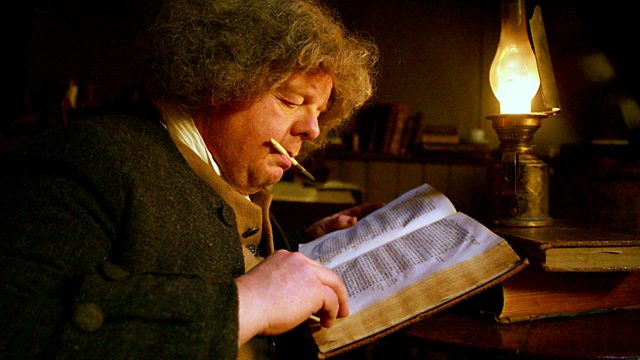
1499 Birth of Jan Łaski, the Polish reformer (depicted here at an audience with King Edward of England).

1530s Mennonite Christians from the Netherlands move to Gdansk area (Vistula delta).

1549 Menno Simmons visits Mennonite Christians

1569 Dirk Philips founded the first Mennonite Church in Danzig. Soon there would be 1000 Mennonite Christians in Gdansk.

1556 Jan Łaski recalled to Poland, where he became secretary to King Sigismund II and was a leader in the Reformed church.

1560 Death of Jan Łaski

1563 Bible translated into Polish (Brest Bible)

1563 Polish Reformed Church (Ecclesia Major) loses non-Trinitarians, who break away to form Ecclesia Minor

1570 Consensus Sandomiensis unites Lutheran, Reformed and Czech Brethren in Poland around the Confession of Sandomir (Konfesja Sandomierska), a Polish rendering of the Second Helvetic Confession. The map to the right shows the spread of different Christian confessions in 1570.

1573 Warsaw Confederation, guaranteeing the right for Polish nobles to be Protestant or Roman Catholic

1588  Change of leadership in Mennonite church; Quirin Vermeulen deposed; church splits into Frisian and Flemish factions, reflecting divisions in Dutch church.

1595 Reformed–Lutheran Union in Poland fell apart.

1598  Dutch language Bible published by Polish Mennonites

1632 Gdansk Bible translated. This was the translation used by Polish Protestants up until the Warsaw Bible in 1975.

1638  Frisian faction of Mennonites in Poland purchase a building for church meetings and poor house.

1648 Flemish faction of Mennonites in Poland purchase a building for church meetings and poor house.

1656 Provisions of Warsaw Confederation annulled, ending toleration for Protestants

1658 Polish brethren, including the Vistula delta Mennonites are expelled from Poland

1668 Conversion from Roman Catholicism punishable by death

1671 Mennonite confession of faith by Georg Hansen

1717 Protestant nobility were stripped of all their political rights, public worship banned.

1724 Execution of Protestants, including two Protestant mayors.

1768  Flemish Mennonites complete German catechism

1764 Under enlightened king Stanisław August Poniatowski (1764–95), the Reformed quickly began to rebuild themselves from ruins.

1768 Political rights of Protestants reinstated

1786 Mennonite Christians start to emigrate from Poland to Russia

1808 Flemish and Frisian Mennonites in Poland reunited.

Some links to internet resources in Polish: 

https://omniglot.com/babel/polish.htm

https://baptysci.pl/kosciol/historia

http://www.kech.pl/historia/

https://przeglad.olkuski.pl/narodziny-rozkwit-i-upadek-reformacji-w-polsce/

My thanks go to Krzysztof Rutkowski of Legatio for his help, updating this page and providing internet resources.

понедельник, 20 апреля 2020 г.

«Аще и во гроб» - пасхальный знаменный распев, славление (and English translation)

«Во гроб сошёл бессмертным,
разрушил силы ада
и воскрес, как победитель,
говорил жёнам-мироносицам „Радуйтесь“,
апостолам дал мир,
и своим воскресением дал воскресение всем остальным,
и все праведники взошли с Ним на небо».

«Аще и во гроб» - пасхальный знаменный распев, славление


"He descended to the grave immortal,
destroyed the power of hell
and rose as a victor,
he said, "Rejoice," to the Myrrh-bearing women
gave peace to the Apostles
and by his resurrection he
gave resurrection to all the rest,
and all the righteous ascended with Him to heaven."

Kontakion for Easter (my translation)

четверг, 16 апреля 2020 г.

Воля Бога и свобода человека (1647)

"Бог от всей вечности, по мудрейшему и святому благоволению воли Своей, свободно и неизменно предусмотрел всё, что происходит: но таким образом, что Бог не есть автор греха, воля его творений не насилуется, и свобода или условность вторичных прични не упраздняется, а утверждается."

Вестминстерское вероисповедание, глава 3, раздел 1, 1647 

"God from all eternity did, by the most wise and holy counsel of His own will, freely, and unchangeably ordain whatsoever comes to pass: yet so, as thereby neither is God the author of sin, nor is violence offered to the will of the creatures, nor is the liberty or contingency of second causes taken away, but rather established."

Westminster Confession of Faith, chapte
r 3, section 1, 1647

среда, 1 апреля 2020 г.

Библейская истина и реальность (К С Льюис, Просто Христианство)

Я помню, во время одной моей беседы пожилой офицер, побывавший, видно, во многих переделках, поднялся и сказал: "Мне вся эта болтовня ни к чему. , доложу вам, я тоже человек религиозный. Я знаю, что Бог есть. Как-то ночью, когда я был один в пустыне, я чувствовал Его присутствие. Это величайшая тайна. Именно поэтому я не верю всем вашим аккуратным формулам и догмам. Да и каждому, кто пережил реальную встречу с Hим, они покажутся жалкими, сухими и ненастоящими".

File:North Atlantic Ocean laea relief location map.jpg - Wikimedia ...В каком-то смысле я согласен с этим человеком. Вполне вероятно, что он и в самом деле пережил встречу с Богом в той пустыне. И когда от личного опыта он обратился к христианской доктрине, то, видимо, почувствовал, что переходил от чего-то реального к отвлеченному и не очень значительному. Hаверное, что-то подобное испытывал бы человек, который видел Атлантический океан с берега, а теперь рассматривает его на карте. Сравнимы ли океанские волны с куском раскрашенной бумаги? Однако дело вот в чем. Карта - действительно кусок раскрашенной бумаги, но вы должны понять две вещи. Во-первых, она составлена на основании открытий, сделанных сотнями и тысячами людей, плававших по настоящему Атлантическому океану, то есть как бы впитала в себя богатый опыт, не менее реальный, чем тот, который пережил человек, стоявший на берегу. За одним исключением. Человек этот видел океан лишь в каком-то одном, доступном ему ракурсе. Карта же сконцентрировала в себе все опыты, вместе взятые. Во-вторых, если вы хотите куда-то отправиться, карта вам необходима. Пока вы довольствуетесь прогулками по берегу, впитывать в себя величественное зрелище гораздо приятнее, чем рассматривать карту. пожелай вы отправиться в Америку, она будет вам несравненно полезнее, чем ваши прогулки. 

К С Льюис, Просто Христианство

воскресенье, 15 марта 2020 г.

What is your wall? (a reading of Nehemiah)

(No, this is not about the Coronavirus.)File:Sword and Trowel cover.gif

Since October I have been meeting up with a friend on a weekly basis to read through the Old Testament book of Nehemiah. Notwithstanding occasional interruptions, we have met up pretty much every week. Some of the passages have been really engaging, full of new insights and discussion points, while others, such as chapter 3 (a list of names of those who worked on which bit of the wall), have been harder work. But there hasn't been a passage we have got nothing from, albeit at times the passage has been a springboard to talk about other related topics.

Nehemiah, written at the time of restoration after exile in Babylon, is about rebuilding a wall.

Chapters 1-6 begin with Nehemiah, who is in government service for the powerful Persian Empire, hearing of the reproachable state of his home city. This drives Nehemiah to prayer, followed by boldly petitioning the Persian for permission to remedy the situation. While his compatriots catch his vision, he has to overcome the opposition of those "with no claim or historical right" to Jerusalem.  In the end the wall is rebuilt - in a record fifty-two days - with the involvement of many in the city. 

Chapter 7 represents a bridge between the two sections of the book.

Then from, chapter 8 onwards, the rebuilding continues, but now it is about rebuilding the community spiritually - another "wall" but of a different kind. This involves heeding God's Word and calling on Him in confession and worship, addressing the spiritual causes of the exile. I am still on chapter 9, so there is more to come...

As I have been long-term reading this book, a sermon I found helpful asked, "What is your wall?" In other words, what is the particular focus and task God has set you at the present time. I think I have an answer for me, but I wonder how you might answer that question?  

пятница, 7 февраля 2020 г.

The origin of the Pentarchy (Five Patriarchates)

The earliest churches, founded by the Apostles, were governed by a plurality of elders, as confirmed by church father Jerome in the 4th century.

By the end of the first century the leading elder, who would preside at the church gathering, preach and celebrated the Lord's Supper, came to be known as bishop. It was he who was responsible for receiving, preserving and passing on the Apostolic Teaching.

In a further development the bishop in the capital city of a given province, which was often also the mother church (first founded), came to be known as the metropolitan and had certain rights over the other bishops in his province, who were known as suffragan bishops.

By the third century, the metropolitans in capitals of dioceses (provinces were grouped into dioceses) came to be known as exarchs, mirroring the political structure of the Roman Empire. For example in the diocese of Thrace, the bishop of Heraclea was an exarch, in Asia Ephesus and in Pontus Caesarea.

In 325 at the First Ecumenical Council at Nicaea, after the accession of Constantine, it was ruled as follows: "Let the ancient customs in Egypt, Libya and Pentapolis prevail, that the Bishop of Alexandria have jurisdiction in all these, since the like is customary for the Bishop of Rome also. Likewise in Antioch and the other provinces, let the Churches retain their privileges." (Canon 6)

At the Second Ecumenical Council in 381 it was added, "Because it is new Rome, the bishop of Constantinople is to enjoy the privileges of honour after the bishop of Rome." (Canon 3) The Fourth Ecumenical Council later clarified the jurisdiction of Constantinople, "Consequently, the metropolitans and they alone of the dioceses of Pontus, Asia and Thrace, as well as the bishops among the barbarians of the aforementioned dioceses, are to be ordained by the previously mentioned very holy see of the very holy Church of Constantinople; that is, each metropolitan of the above-mentioned dioceses is to ordain the bishops of the province along with the fellow bishops of that province as has been provided for in the divine canons." (Canon 28) In other words those metropolitans with their see in diocesan capitals (exarchs) of Caesarea, Ephesus and Heraclea were now subject to the higher, ordaining authority of Constantinople.

We can see this pyramid-like structure (bishop-metropolitan-exarch-Constantinople) in canon IX of the Fourth Ecumenical Council: "If any Clergyman has a dispute with another, let him not leave his own Bishop and resort to secular courts, but let him first submit his case to his own Bishop, or let it be tried by referees chosen by both parties and approved by the Bishop. Let anyone who acts contrary hereto be liable to Canonical penalties. If, on the other hand, a Clergyman has a dispute with his own Bishop, or with some other Bishop, let it be tried by the Synod of the province. But if any Bishop or Clergyman has a dispute with the Metropolitan of the same province, let him apply either to the Exarch of the diocese or to the throne of the imperial capital Constantinople, and let it be tried before him."

At the same Council of 451 Jerusalem was granted autonomy from the See of Antioch and "the bishop of Jerusalem, or rather the most holy Church which is under him, shall have under his own power the three Palestines".

These five elevated episcopal sees, Rome, Constantinople, Alexandria, Antioch and Jerusalem, which enjoyed "jurisdiction" and "privileges of honour", were later designated 'patriarchates' by Justinian in 531.

Within the Empire Cyprus had autocephalous (autonomous) status from 431.

Outwith the Empire, the heads of churches were designated Catholicoi (singular 'Catholicos'), e.g. the Sassinian Church or the Armenian Church.


воскресенье, 26 января 2020 г.

"Писатель лишь начинает книгу, а завершает её читатель"

В английском оригинале: "A writer only begins a book. A reader finishes it."

Image result for samuel johnson 


Это цитата Сэмюэла Джонсона (1709-1784гг), ученый, который написал первый словарь английского языка. Значение словаря сравнимо со Словарём Академии Российской для русского языка.

Цитируя Джонсона, я, конечно же, не сторонник крайне субъективного подхода к текстам, по которому значение текста якобы не в самом тексте, и не в авторском смысле, а в восприятии читателя. Я так не считаю.

В то же время, книга "ждет" ответа того, кто ее читает. Ответ читателя, в смысле не только реакции читателя, но и применения читателем посыла книги, завершает книгу. Можно сказать и в этом "цель" кииги. Это не означает, что читательский ответ как-то входит в состав книги. В этом смысле книга завершена и без ответа. Но, не произведя ответ, книга незавершена. И ответ читателя является своего рода "отзыва" книги.

Это можно сравнить с любовью. Можно представить себе влюбленного молодого человека. Он имеет сильные чувства к своей избраннице, совершает разные подвиги для нее. Они и без ее ответа совершенны, но если она принимает, отвечает ему взаимной любовью, то это завершает его любовь (ср. 1 Иоанна 4:17; Кол 1:24).

Если касательно текстов, а тем более Священного текста, то цитата Джонсона порождает понятие о разных "чтениях" текста. Иными словами, мое чтение, к примеру, послания к Галатам, будет отличаться от чтения того же послания в XVI веке. Или же разные чтения пророчества Иова в Сомалии или в Калифорнии. Можно это сравнить с зерном (семенем): в зависимости от почвы, в которой оно посажено, оно будет приносить разные плоды. Семя Евангелие - универсально, но плоды могут выглядеть по-разному в разных культурах и людях (самое главное, чтобы это были плоды, а не терны!).